
Co-Living Design Study for Toronto Lots
Six Prototypes for Shared Living
Co-living is an age-old idea, practised for centuries around the world. Living with extended family or friends is a societal norm, often dictated by and encouraged due to financial necessity and/or cultural expectations. Given the isolating experience from the pandemic and the zoning changes for multiplex, Picnic Design has taken a deep dive into understanding how co-living can work for urban Toronto, starting with the low-rise buildings.
Picnic Design presents two installations at the Interior Design Show. The first one is to Explore Co-living and the second, Experience Co-Living. Both comes down to one question: Do you Dare to Share?

In DARE to SHARE: Explore Co-living, six prototypes are presented as well as an interactive survey. Over the course of four days, visitors came through and their reactions ranged from “maybe later” to “I need this” to “are you selling this?” It was clear that there is interest in the possibilities of co-living, reaffirming that it is a viable option for how we live.
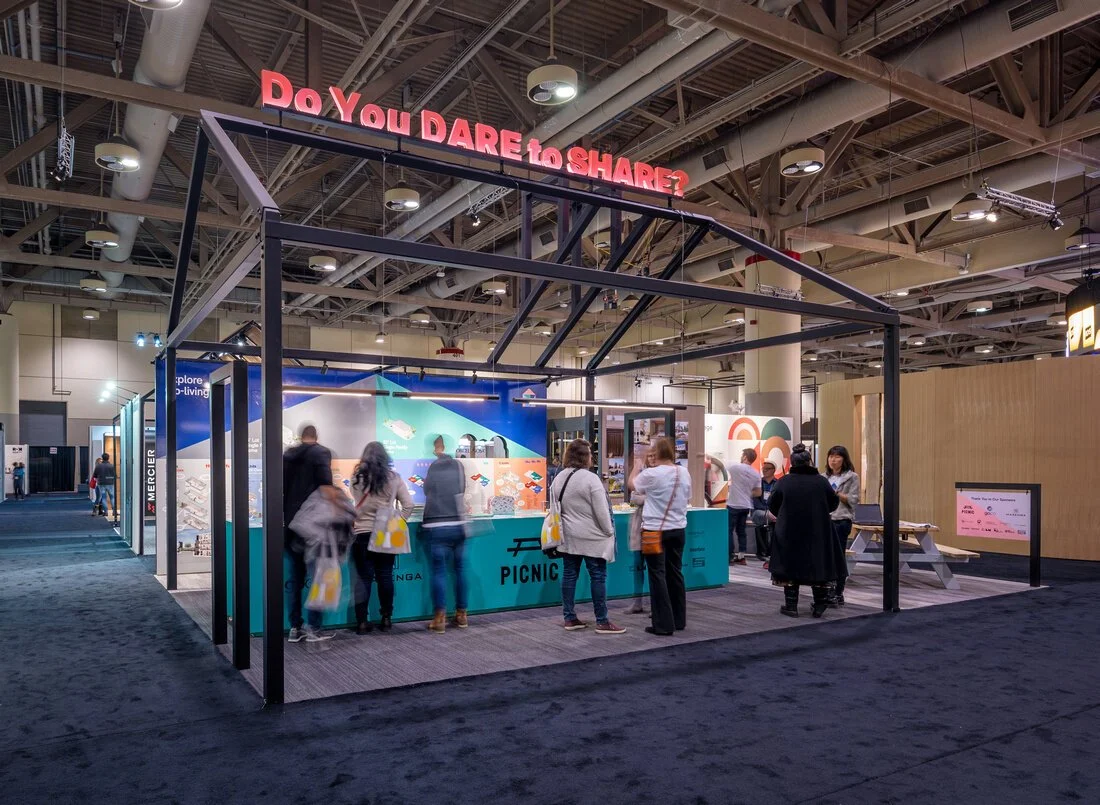
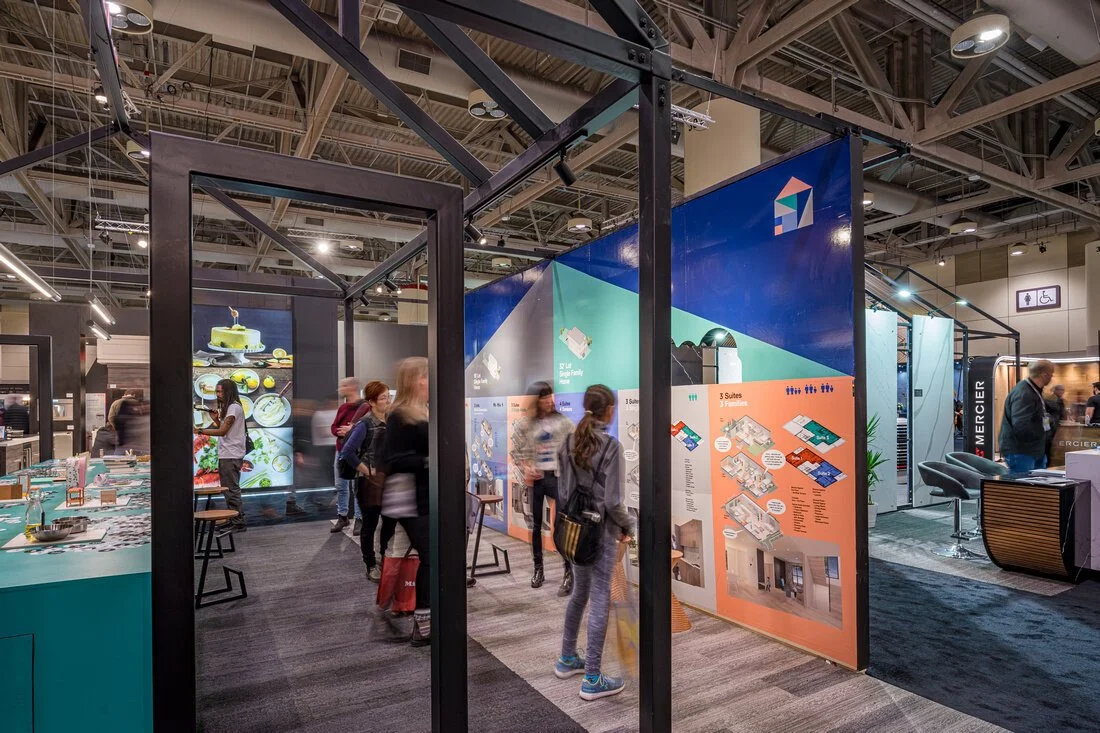
The interactive survey was designed to investigate people’s reactions towards Co-Living. Maquettes of various spaces in a home are presented and participants are asked to answer with yes or no stickers. It asks one simple question: Which of these spaces do you dare to share?
Below shows the results over four days.
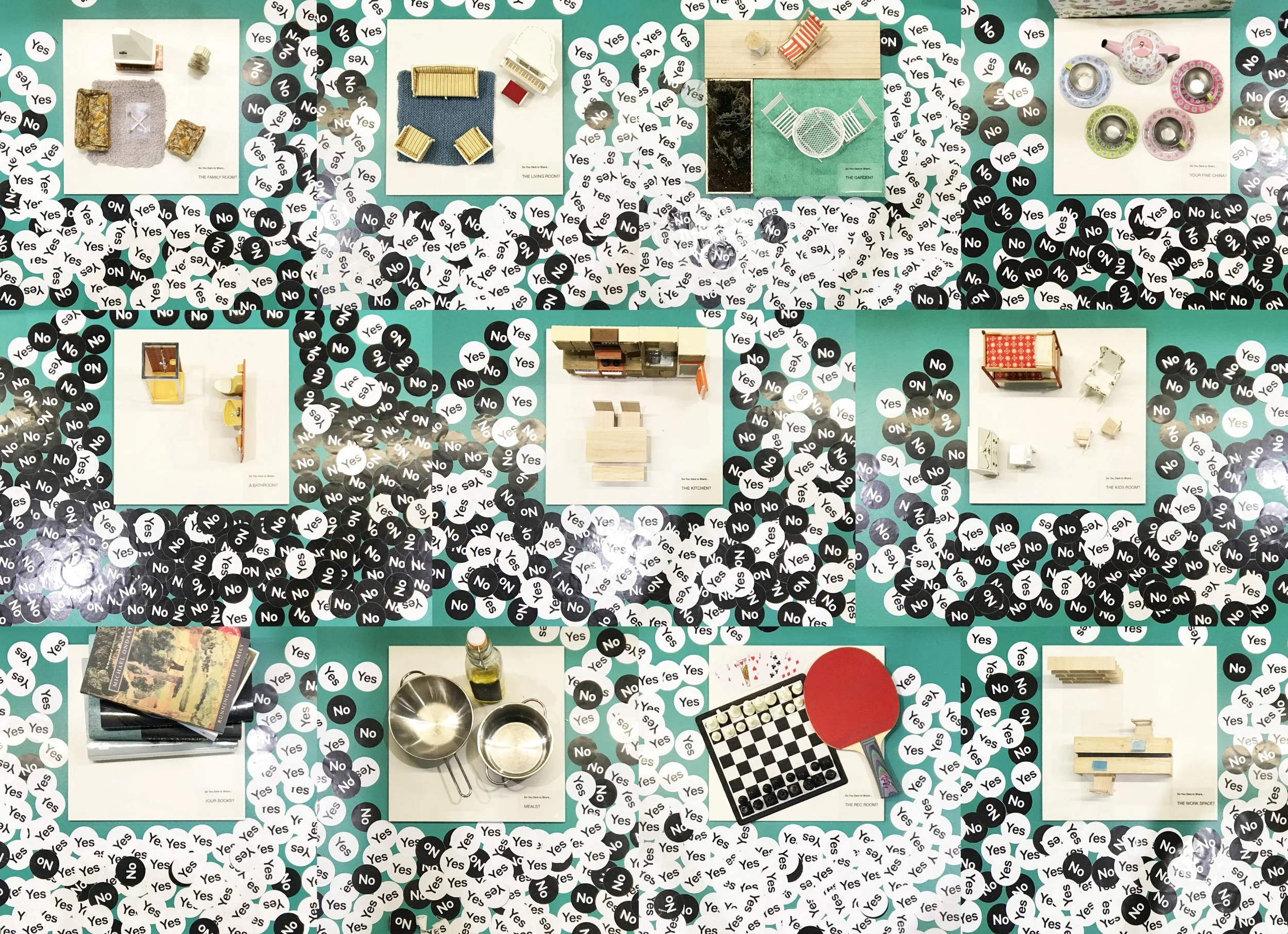
Responses to the informal survey at the “Dare to Share” installation at IDS20 were very enthusiastic. Generally, people’s responses aligned with typical expectations. The bathroom would not be a popular sharing item and it is obvious in the amount of black “No” stickers around it. Most “Yes” went to the garden, the rec room and books. No doubt those are easy translation in scale from our day to day sharing of parks, community centres and libraries.
There was a notable difference between sharing meals and the kitchen. While they were expected to align, 68% voted to share meals but less than half would share the kitchen. While the workspace is one of the top spaces that people are willing to share, actual number is 71%. Perhaps it is the desire for privacy having spent the day in an open concept office and the need to separate home and work life. Regardless, it was illuminating to see the results build over the course of four days and to overhear debates amongst participants.
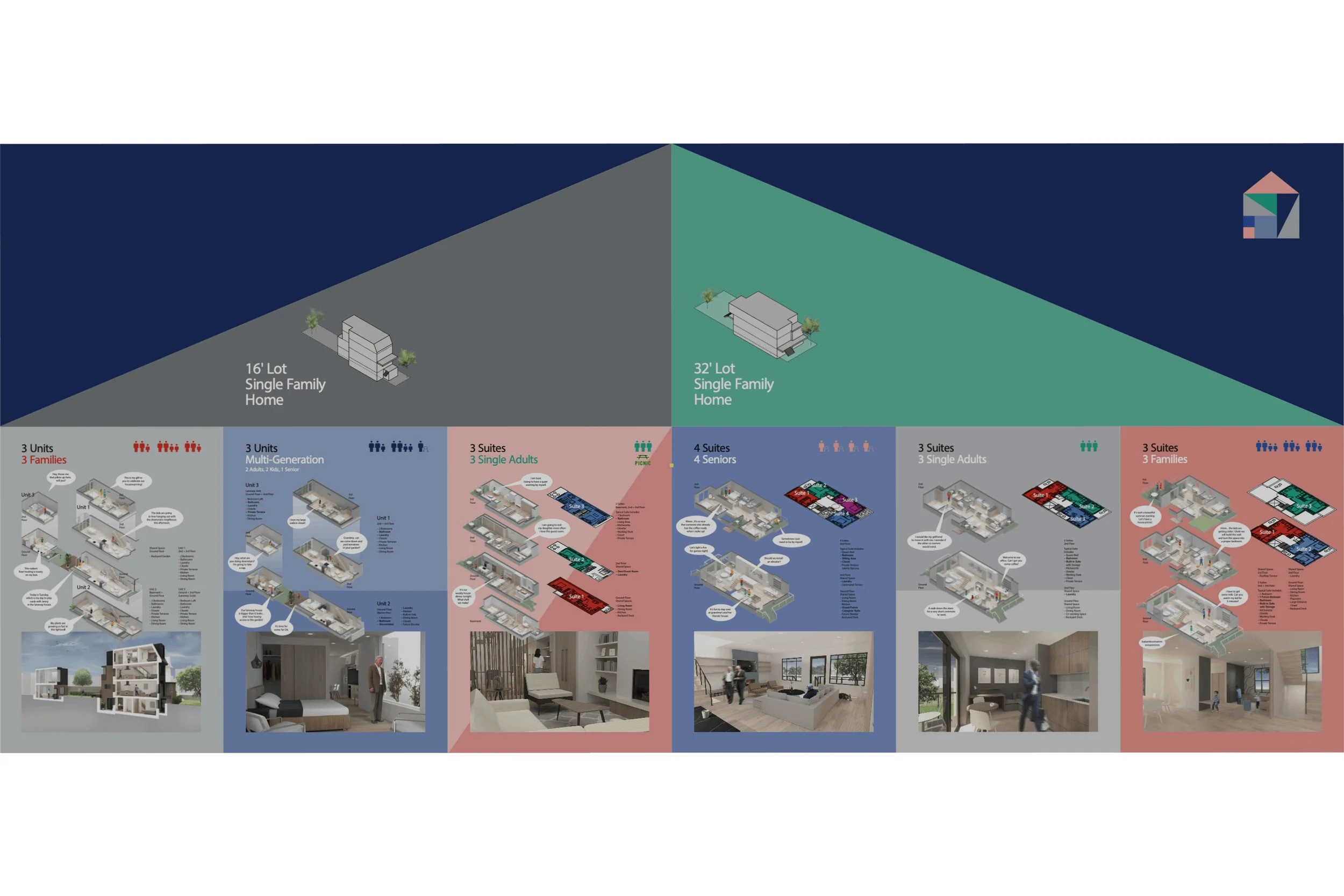
3 Demographic Groups

Adults

Small Families

Multigenerational Family / Seniors
2 Lot Sizes
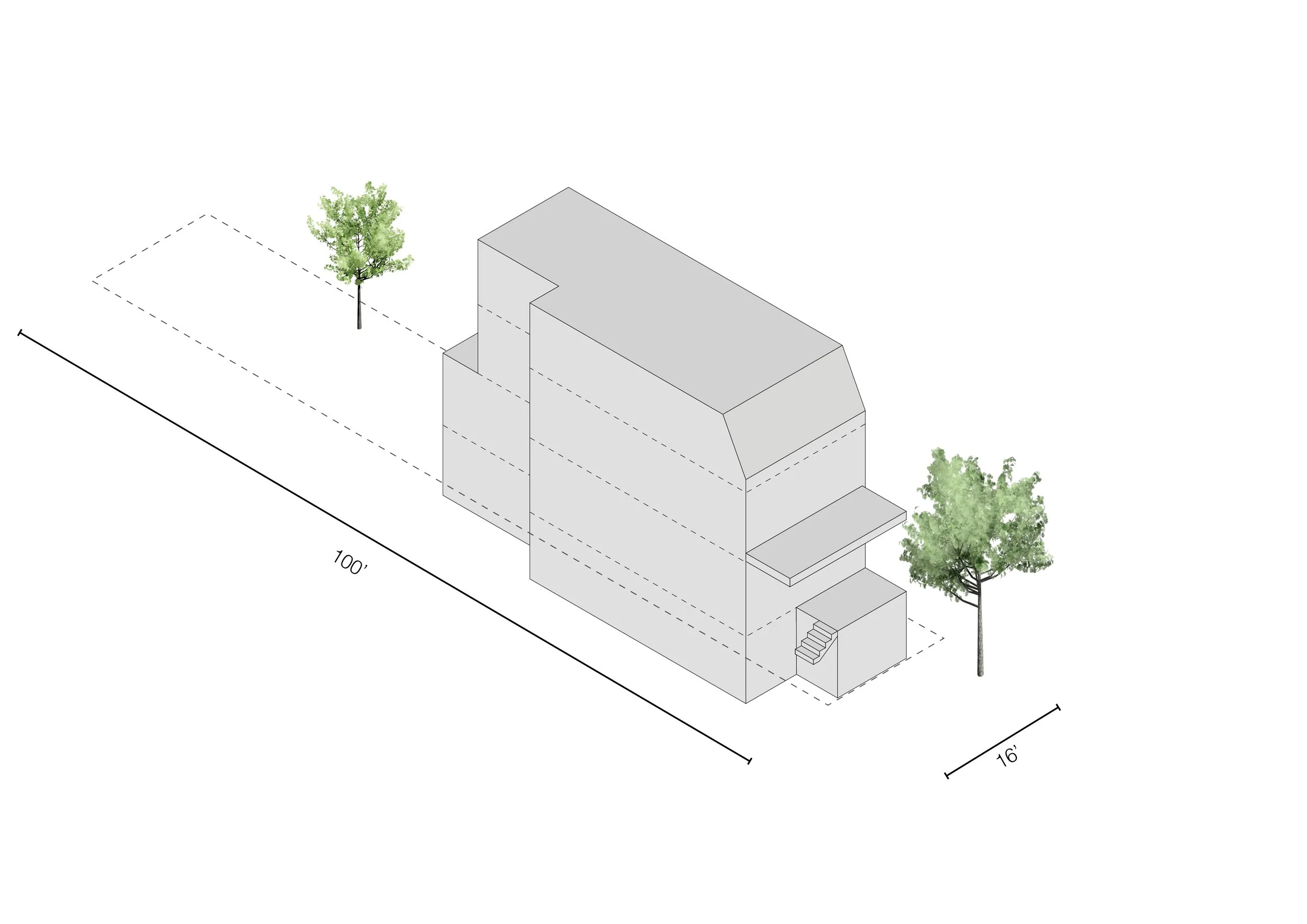
16' x 100'
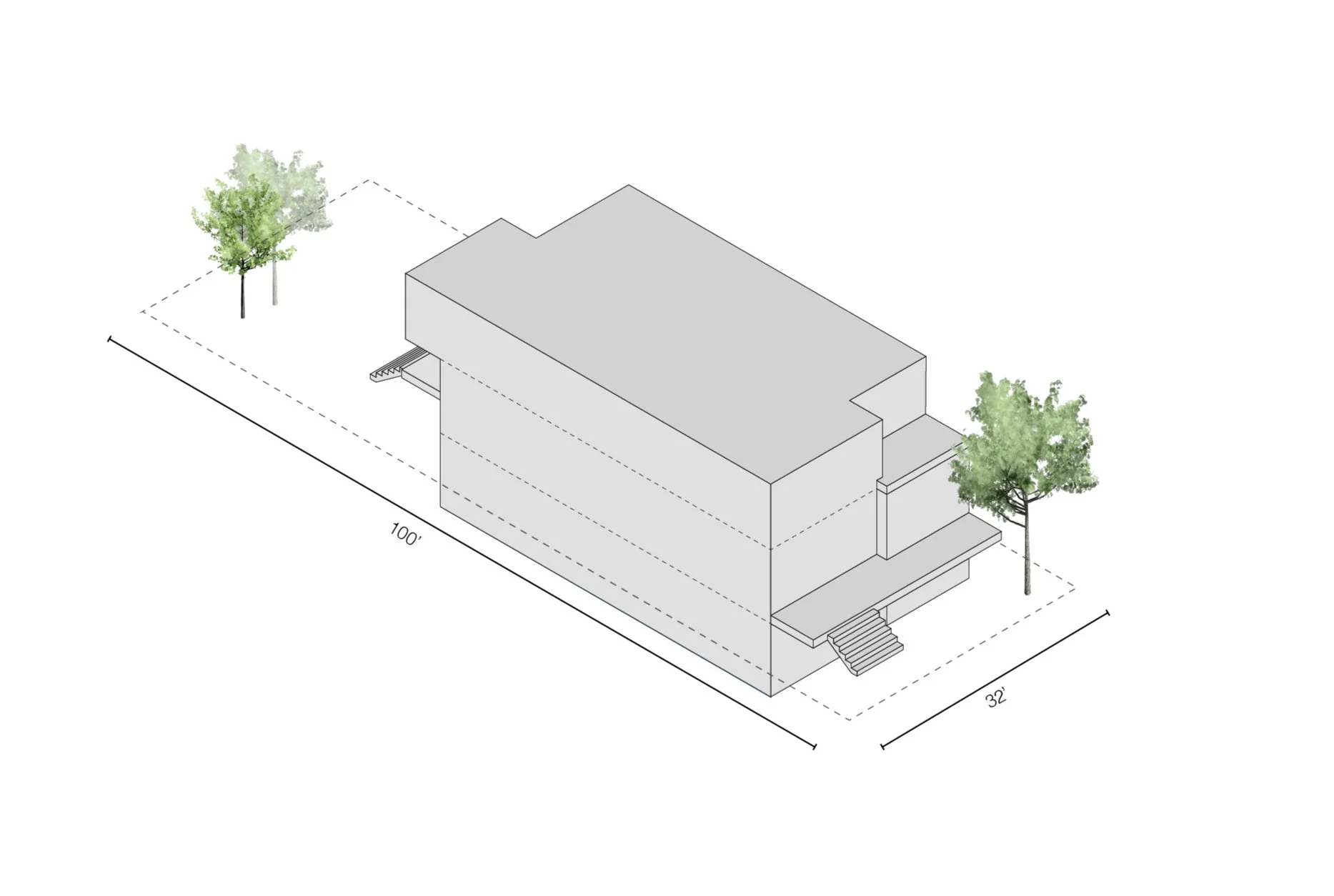
32' x 100'
6 Prototypes
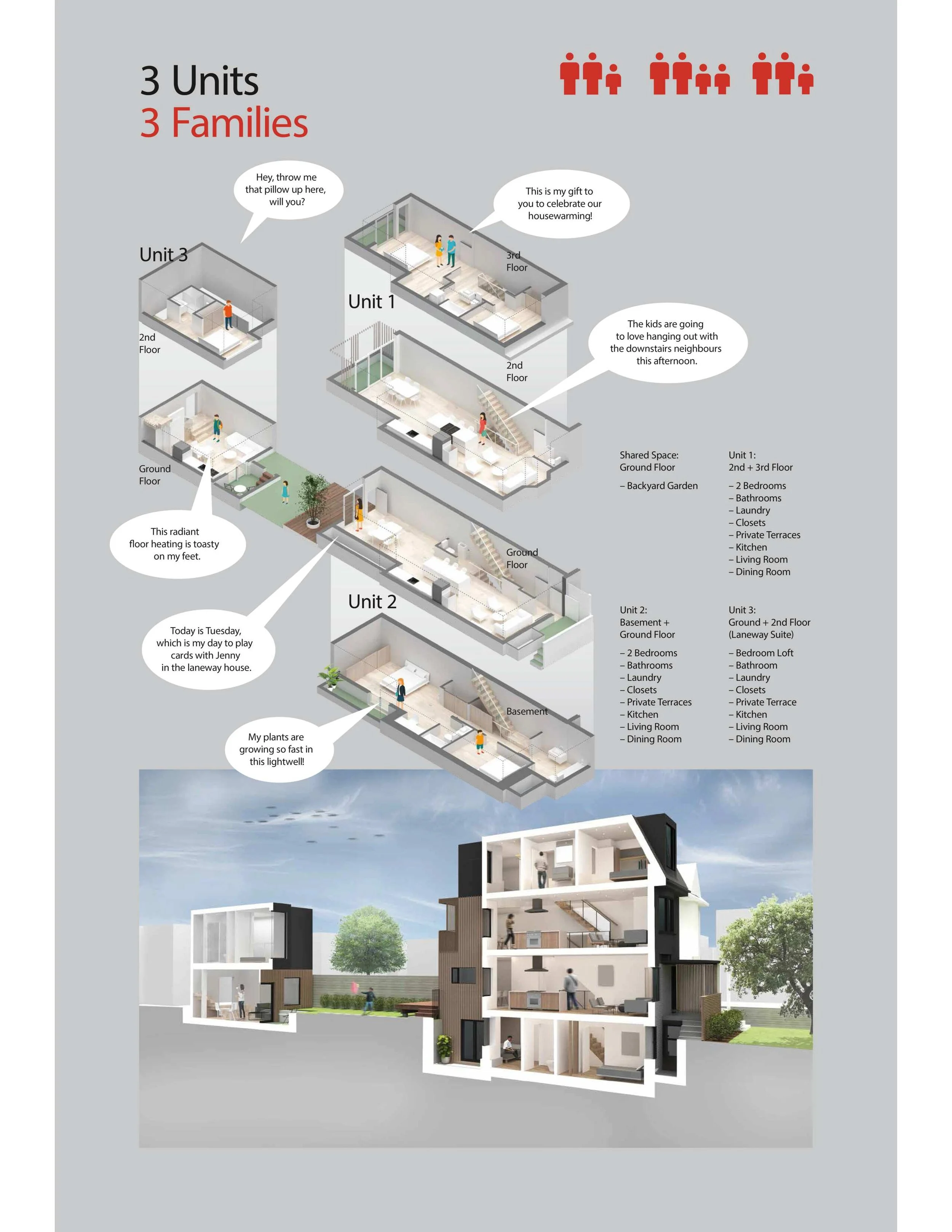
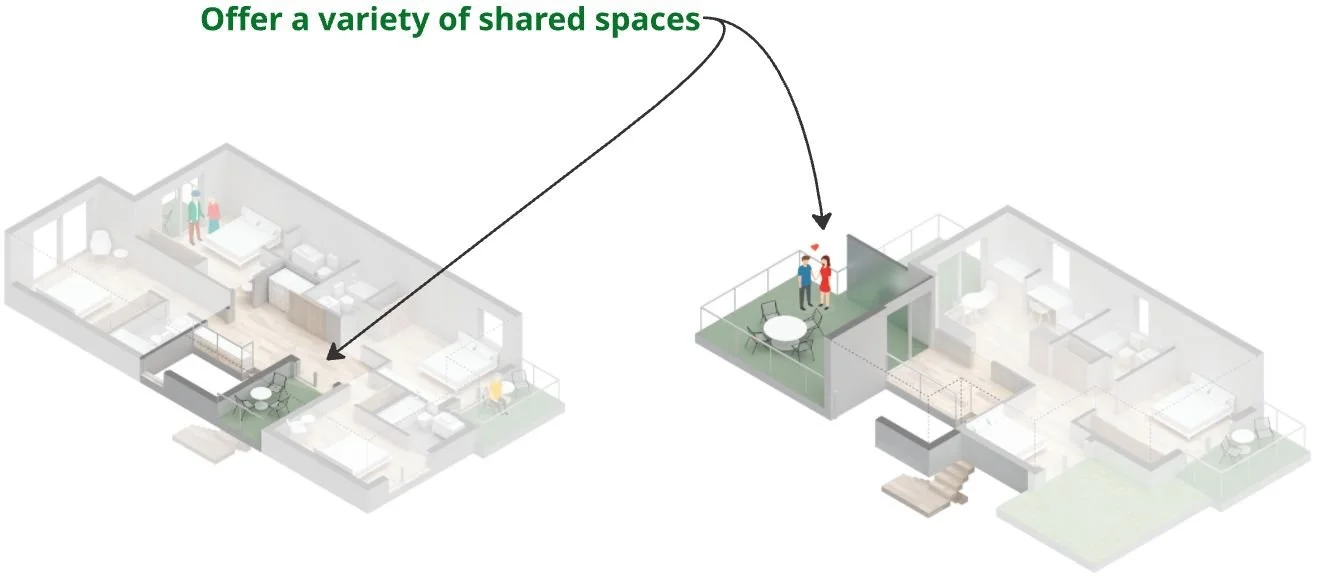
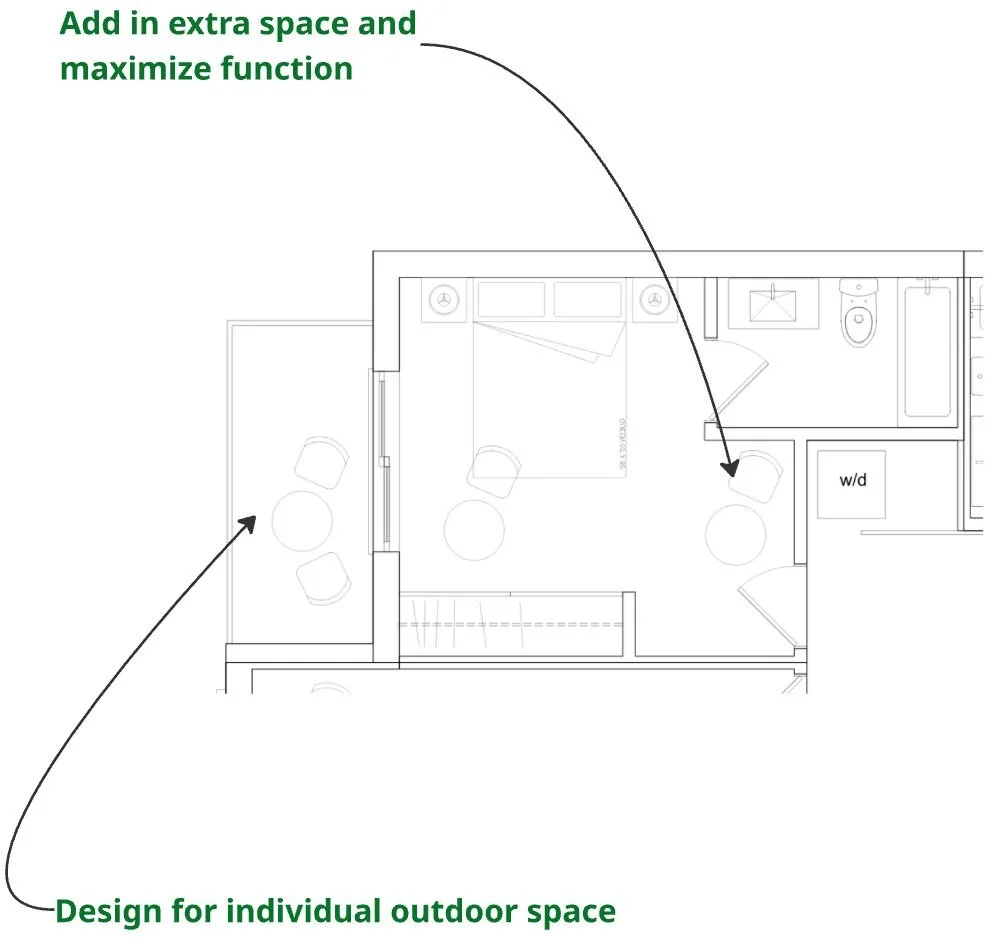
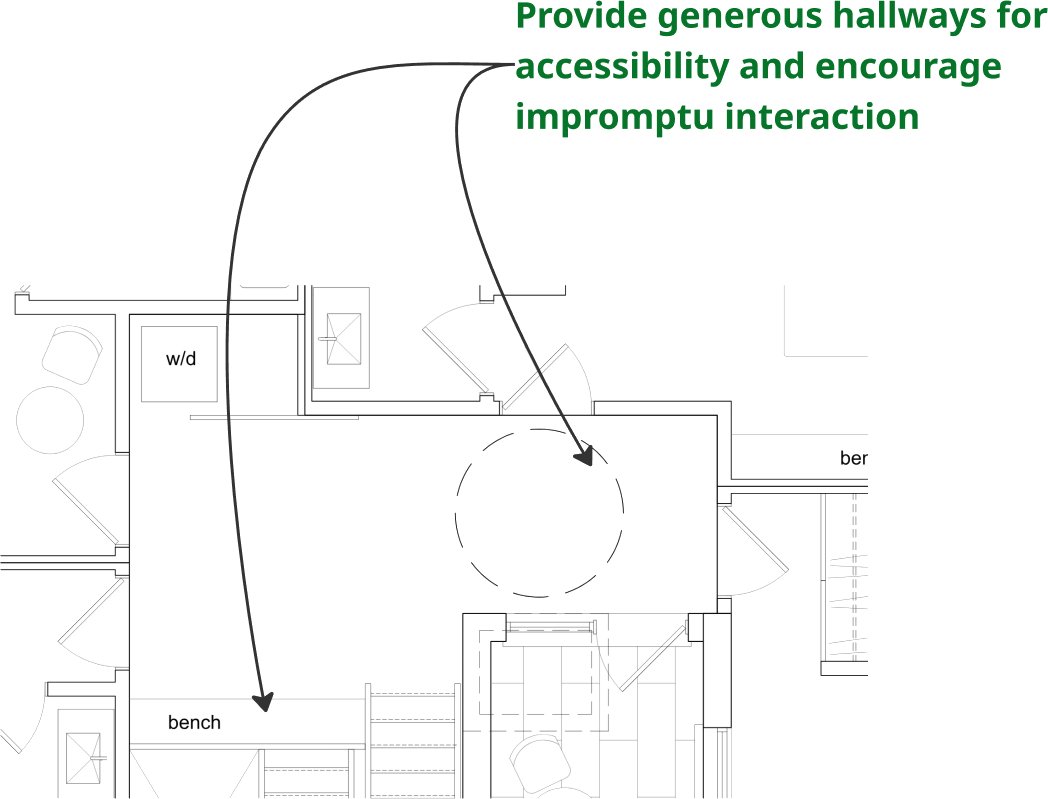
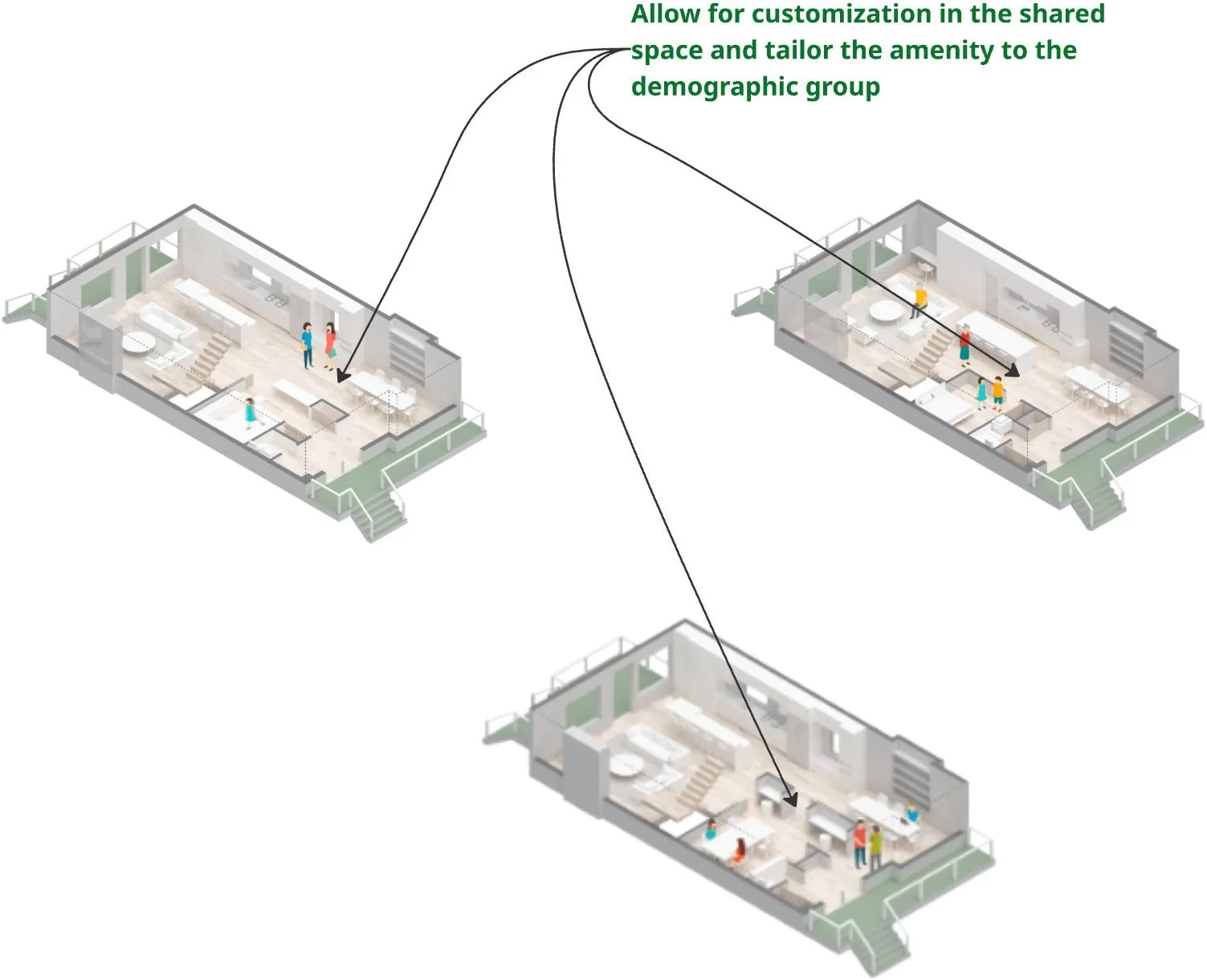
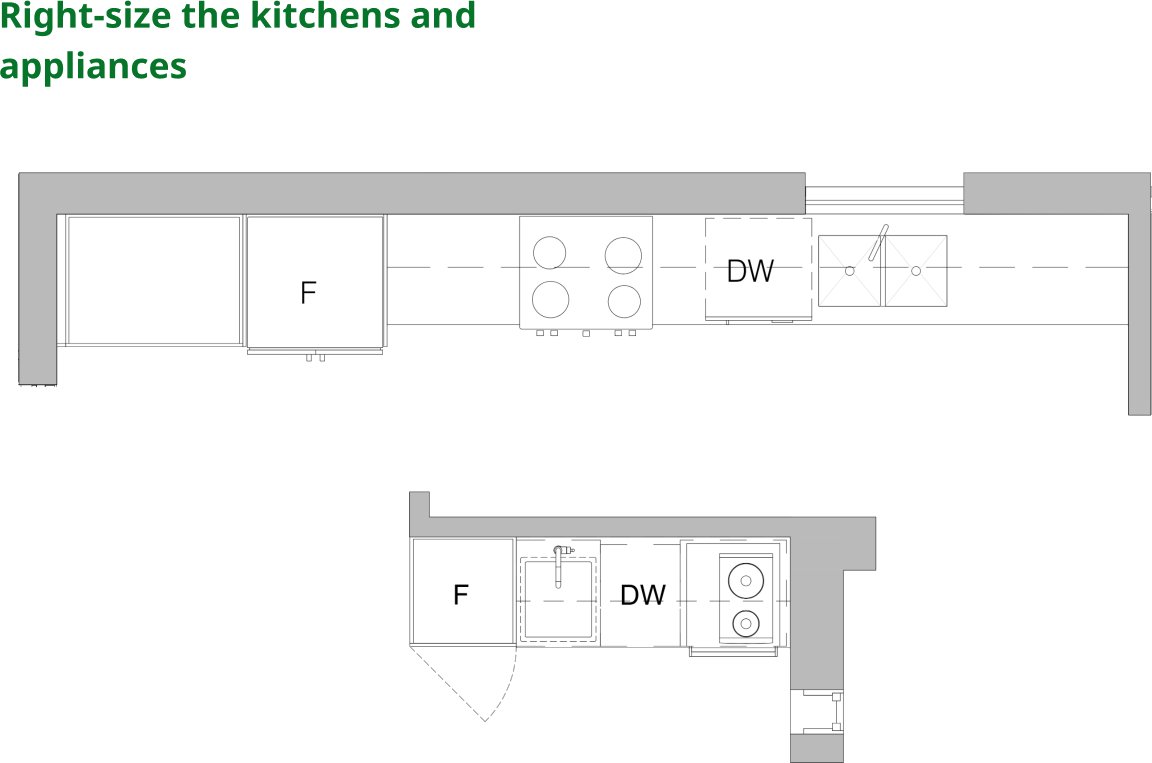
The prototypes are developed with the following ground rules:
In the following year, Picnic Design presented a follow up installation titled DARE to SHARE: Experience Co-Living.
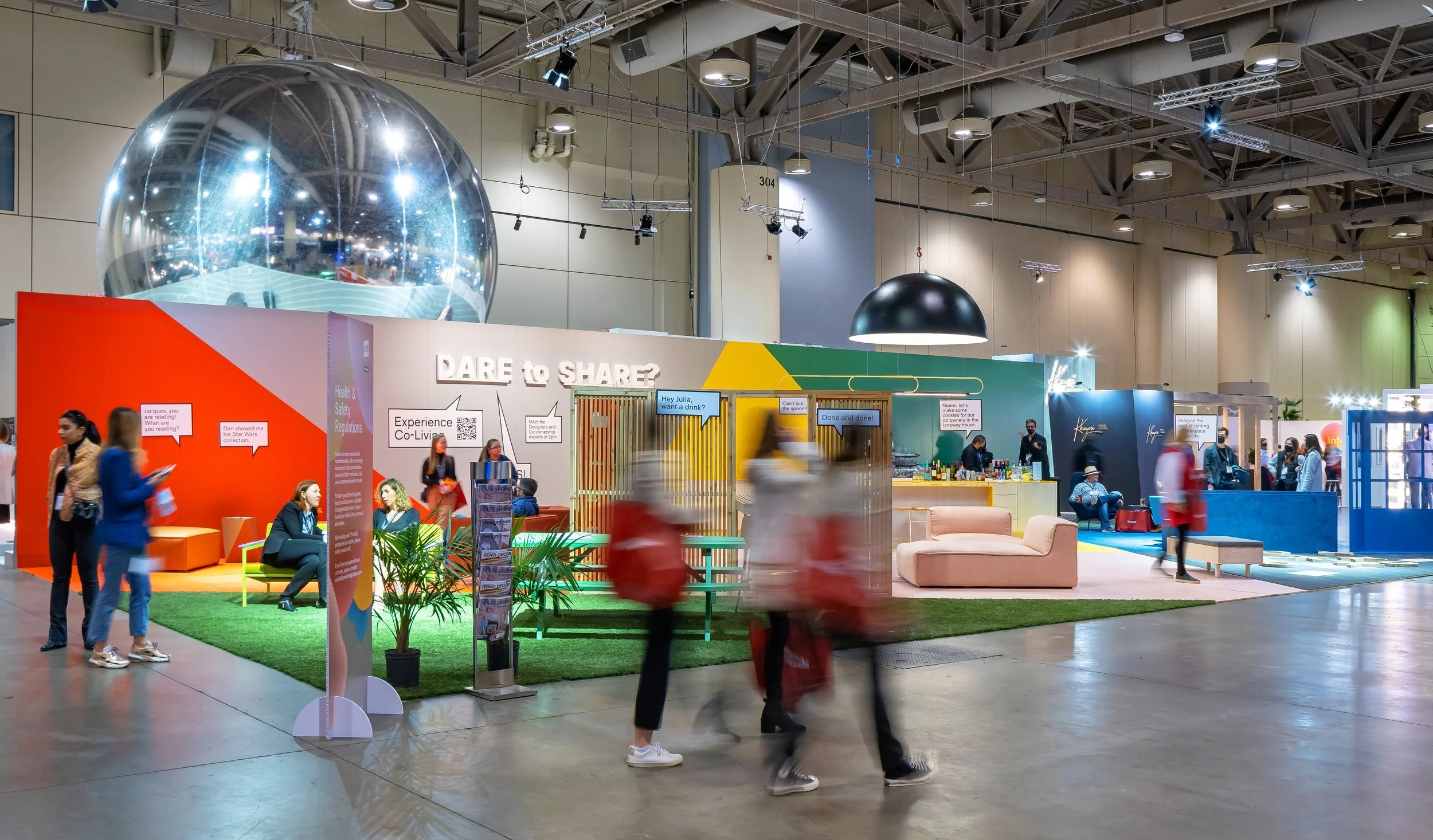
Based on the survey, six spaces that received the most yes's were built out at 1:1 for people to get a taste for sharing. Instead of a walk-through installation, it invited the visitors to sit down and linger. All the spaces work together but each one had a different feel, much like a home. Visitors decided where to go based on their needs at the time. Many decided to try out all of them.
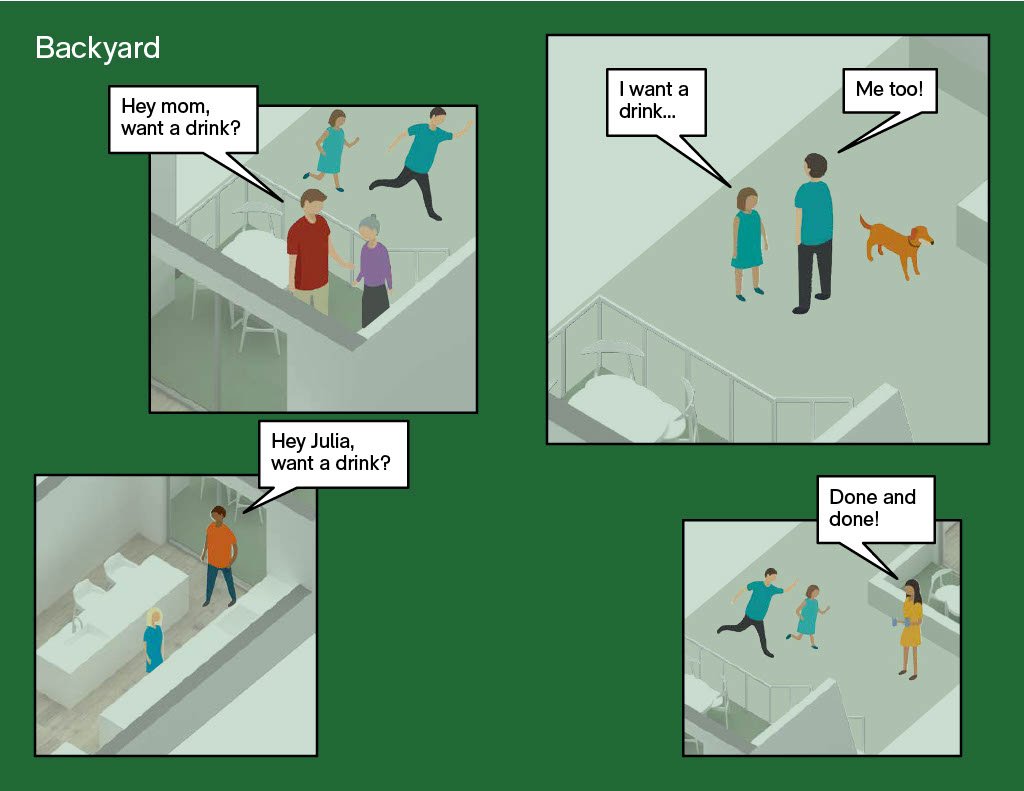
DARE to SHARE infused the IDS central lounge with an experience. Each space is colour drenched from flooring to walls to furniture. The visitors caught up on their emails in the den, grabbed a drink in the kitchen, gathered in the dining room, chatted in the living room, played tic-tac-toe in the rec room, and hung out in the backyard.

The DARE TO SHARE lounge was a huge hit, precisely because it is designed for people in different moods and needs to gather and engage. It was a short but successful experiment in real time. To put the idea of co-living in context, speech bubbles referring to college dorm horror stories or the current housing crisis are placed around the lounge. They spark conversations among friends and strangers alike, providing yet another channel of connection.
For Picnic Design, sharing does not mean less—it means more support, more warmth, and more ways to connect or retreat.
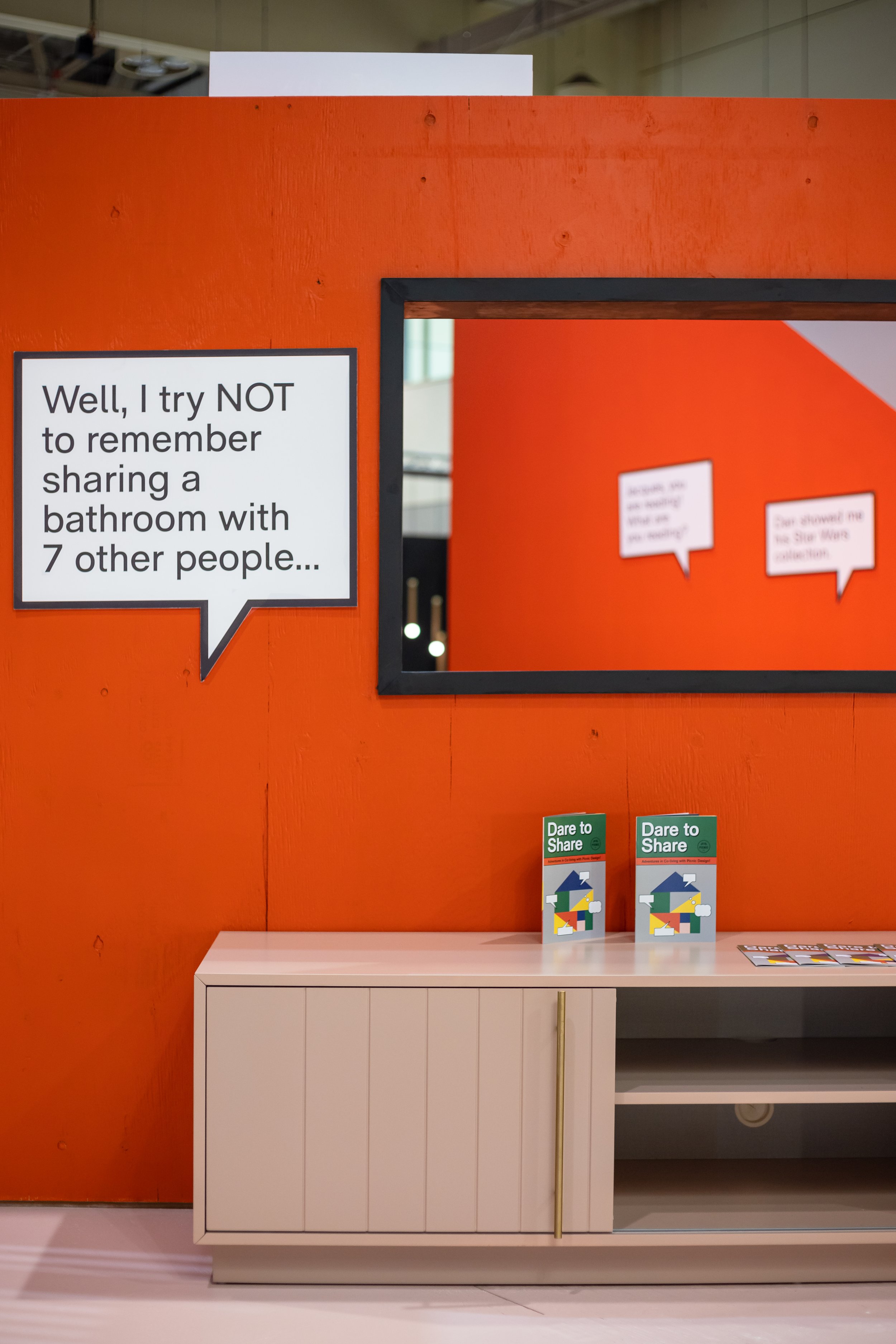
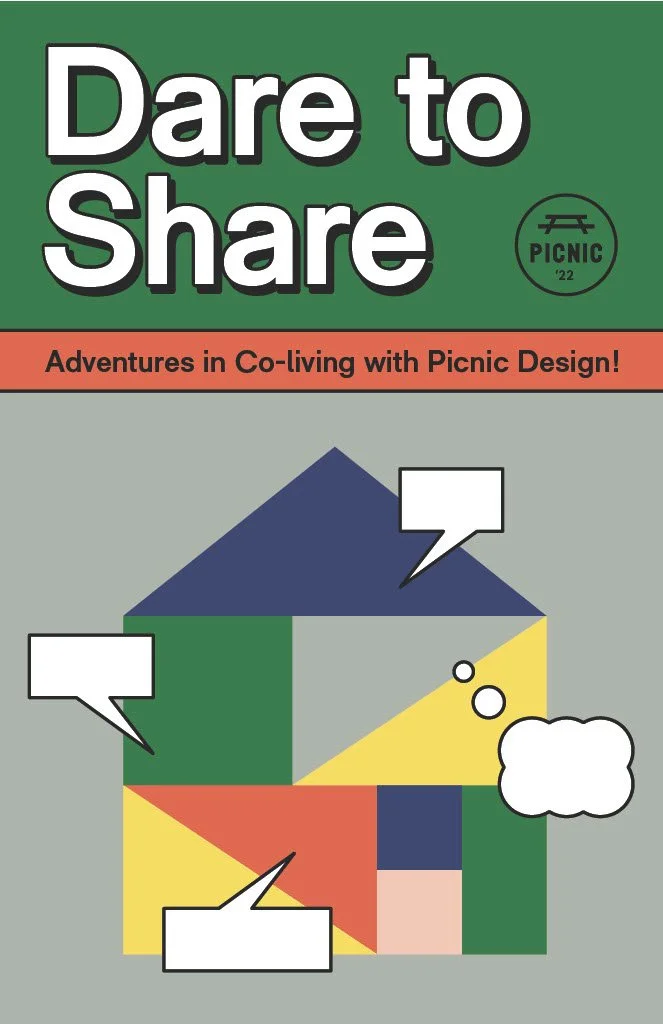
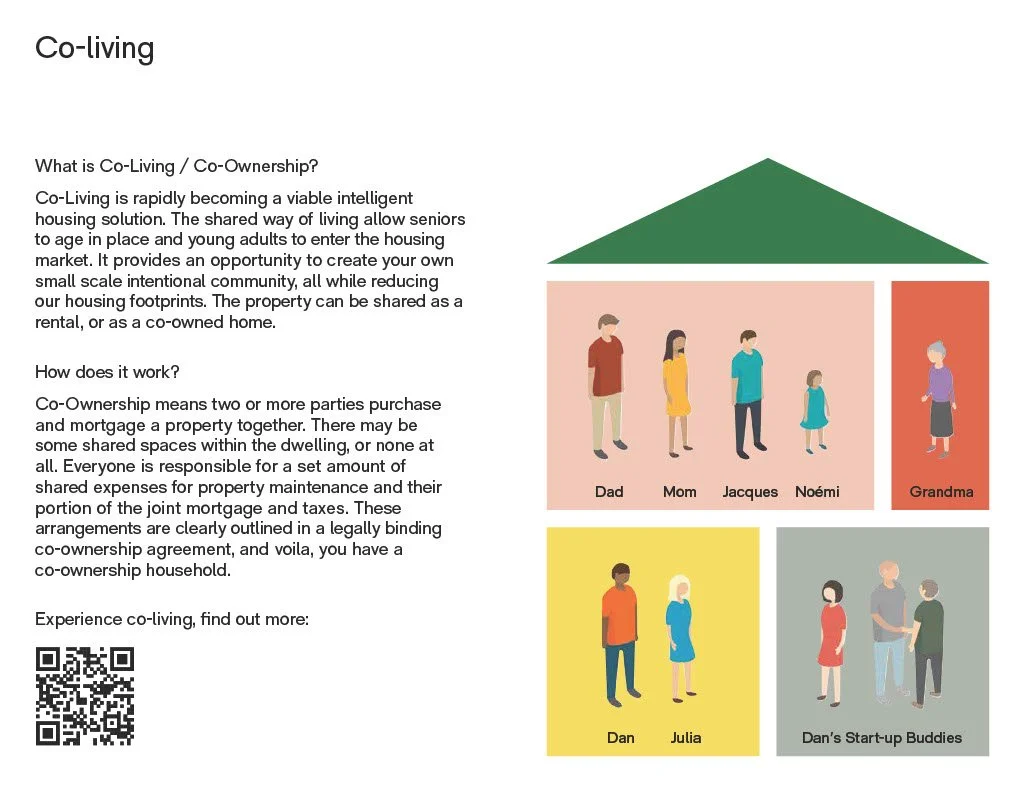
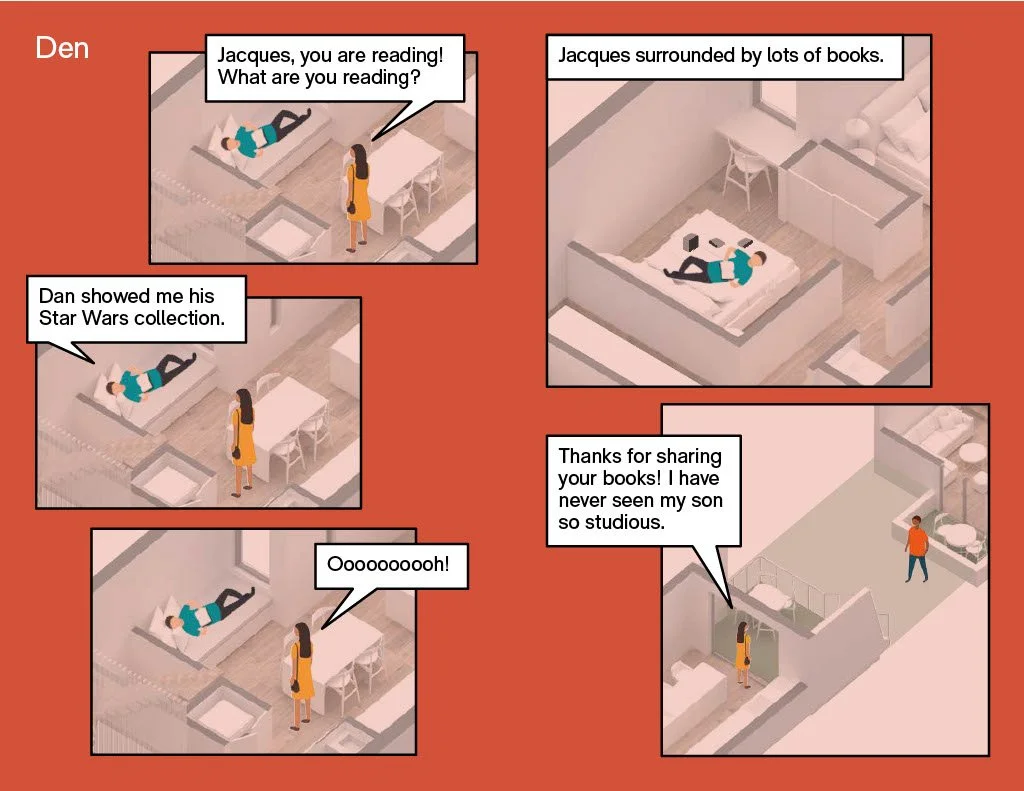
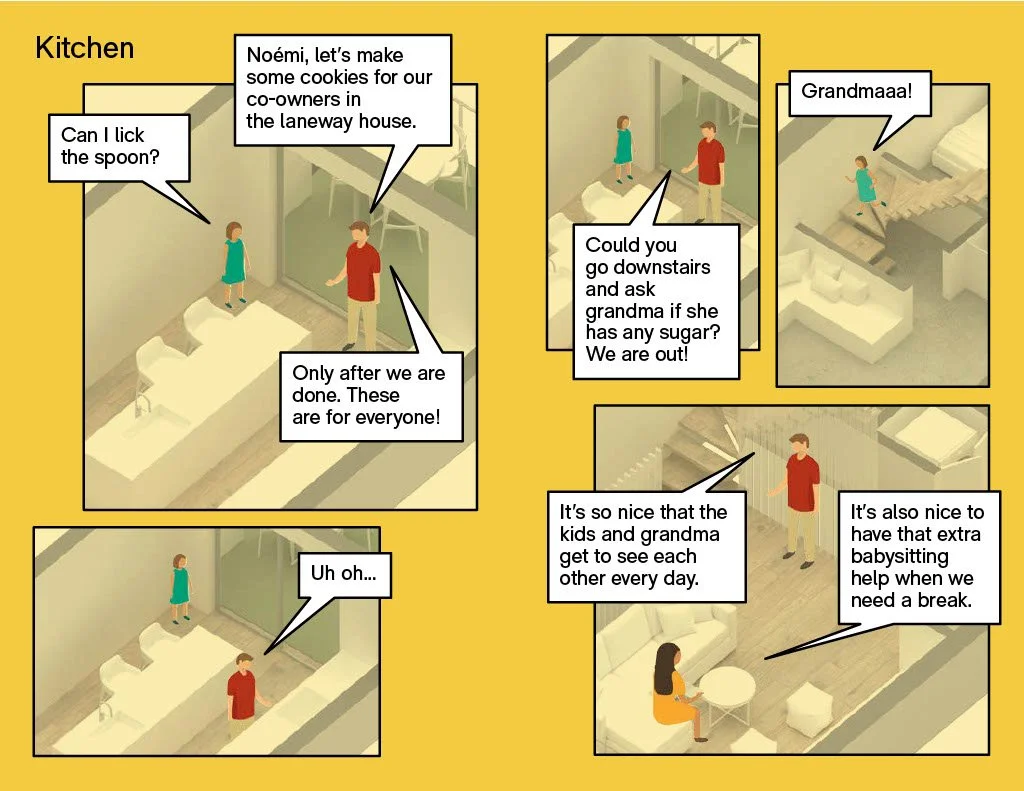
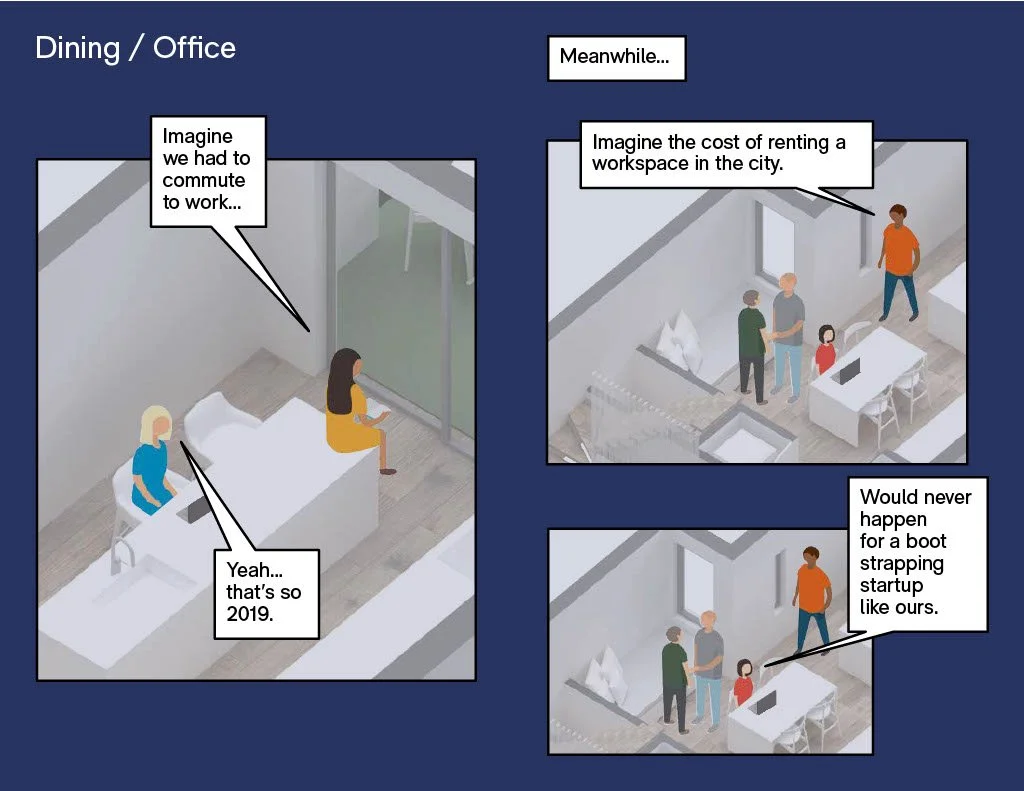
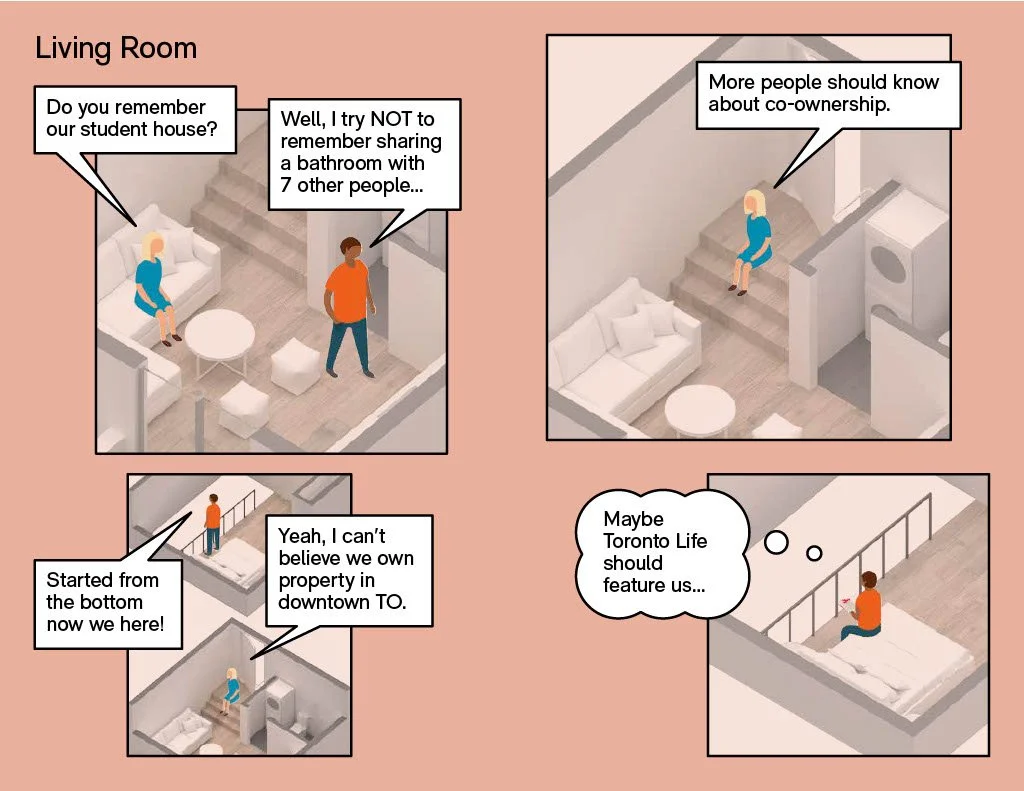
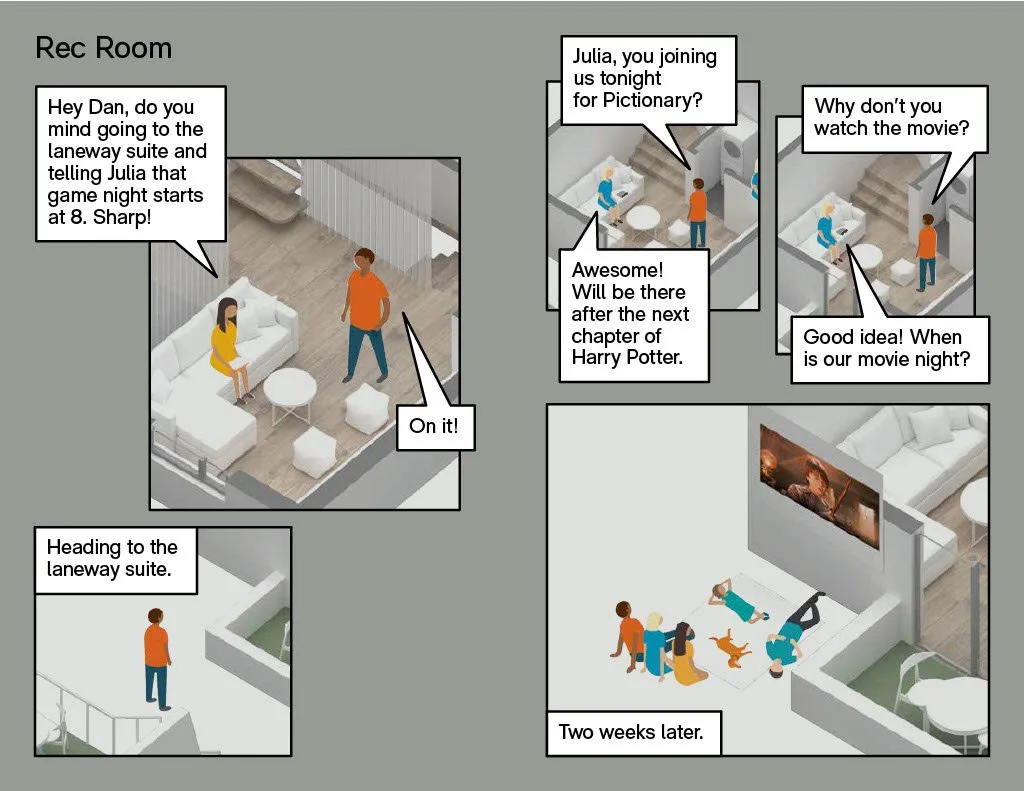
To accompany the experience, a short comic book was produced, colour coded to each space.
Appendix
3 Small Families
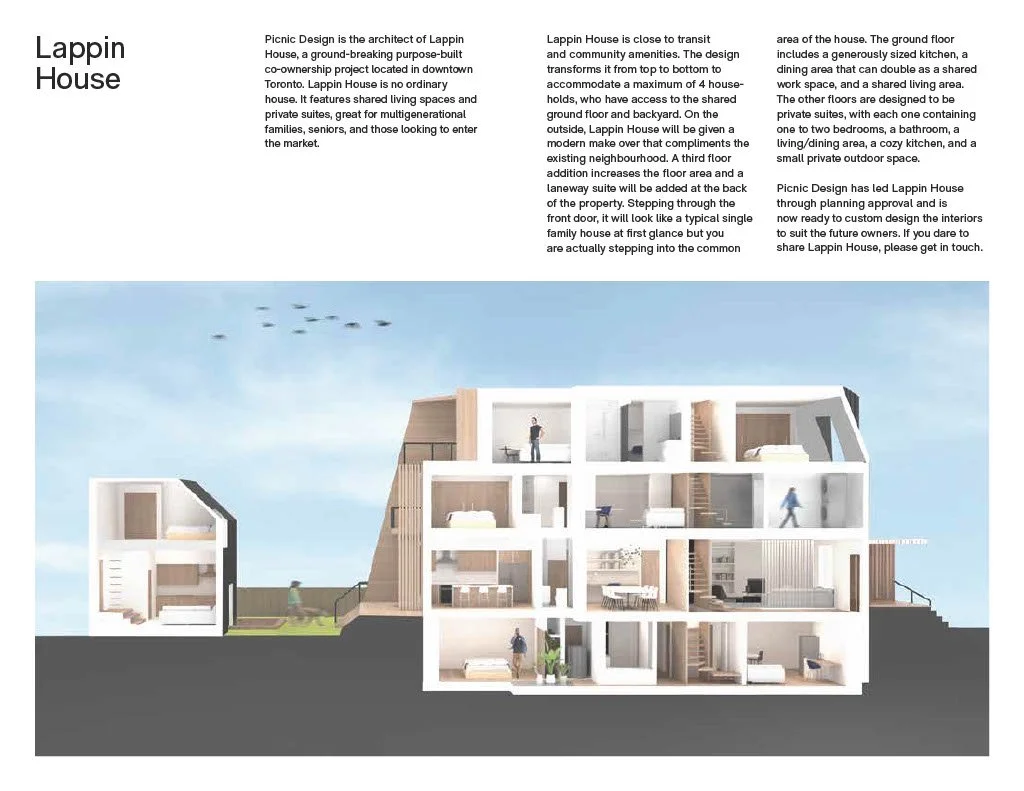
This “3 Units, 3 Families” design reimagines a narrow Toronto lot as a vertical community. Each family has its own private domain, including outdoor space that is woven throughout. All units have shared access to the backyard, which acts as a connector between the house and the laneway suite. Both of the units in the house would be two storeys, each with two bedrooms and its own private outdoor space. The laneway suite would be a one bedroom unit that accommodates a smaller household.
This designs fits into the typical downtown property, complementing the existing neighbourhood, while creating its own supportive mini-community.
Multi-Generation
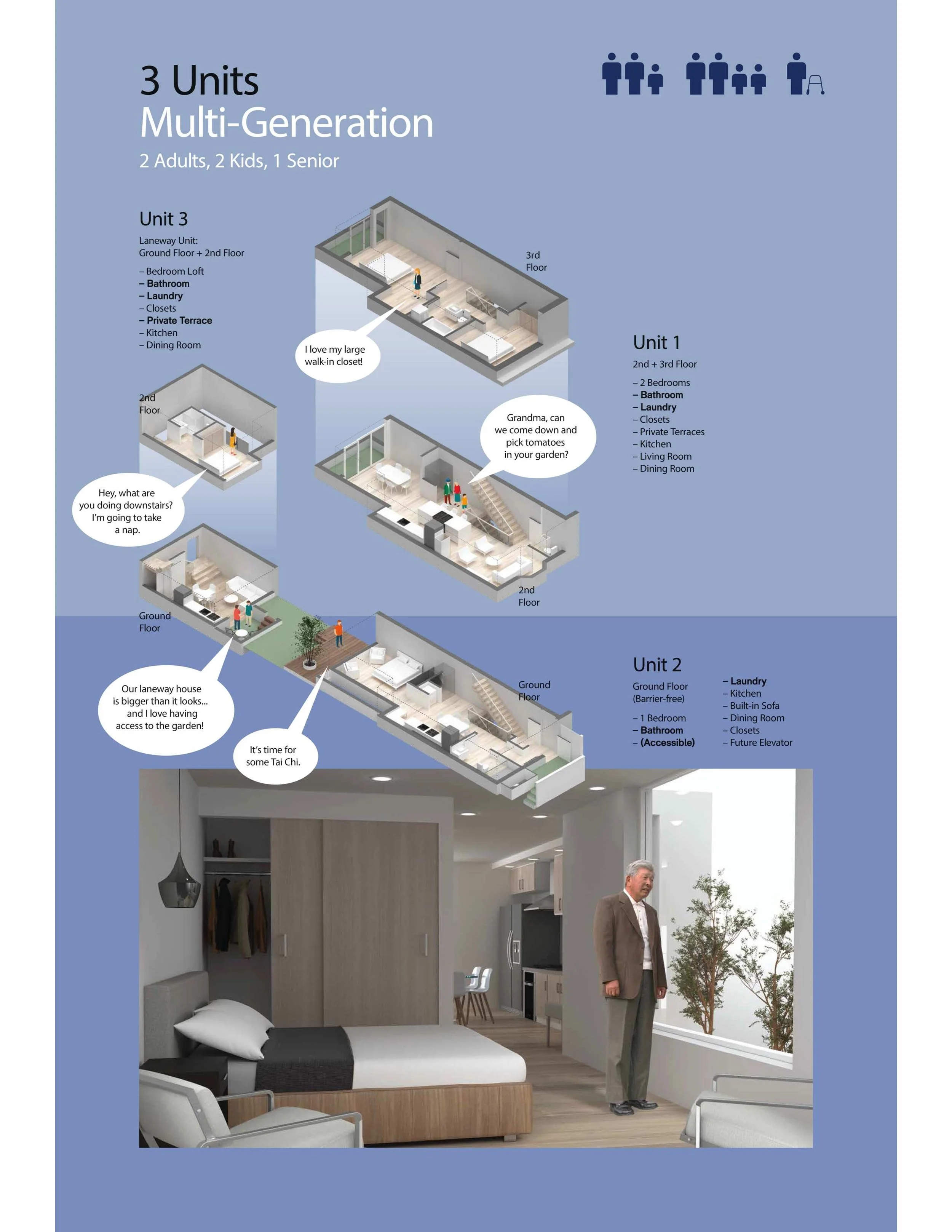
This Multigeneration design reimagines a narrow Toronto lot as a giant family compound, physically connected but with each area defined clearly so everyone has their own space. The ground floor suite is designed to be accessible for the eldest generation, with easy access to the backyard. Second and third floor are designed as one unit for the largest household, likely for a family with children. The laneway suite operates as another unit for other family members - young adults or a young couple. Basement would be used as common storage and/or extra shared space.
Despite the compact footprint, each home feels self-contained while still part of a larger household.
3 Single Adults
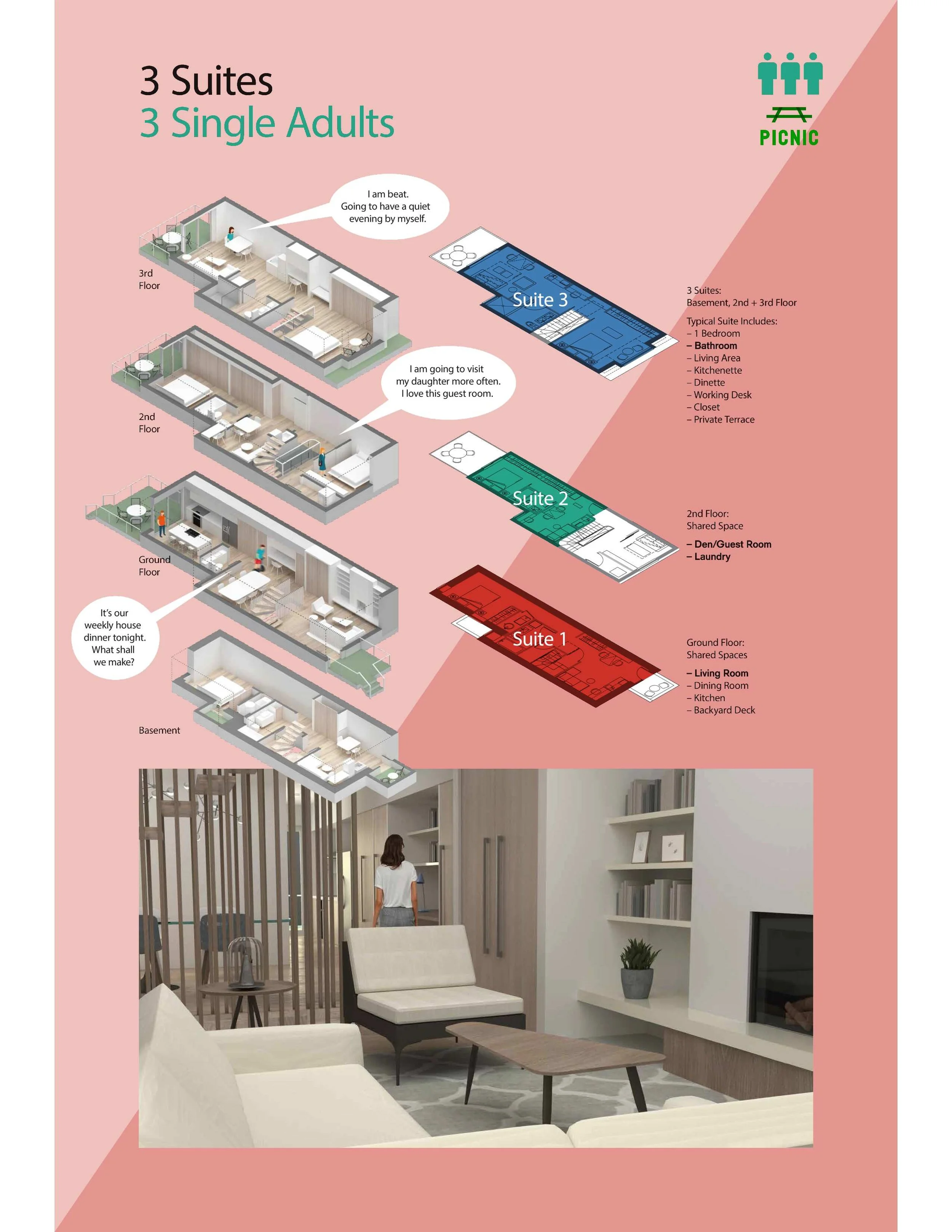
This 3 Adults design reimagines a narrow Toronto lot as a mini-apartment building. Because this is designed to be a home for the long term, not a transient college dorm for a semester, each unit is different. They vary in size and layout to accommodate the different make-up, needs and financial circumstances for each person. The ground floor is conceived as a shared floor for the units on second, third and basement floor. All the units have one bedroom. In addition to the ground floor, a shared bedroom is proposed for visiting guests, doubling as extra shared space.
Both the individual and shared spaces are clearly defined, allowing for everyone to choose when and how to gather.
4 Seniors + Caregiving Suite
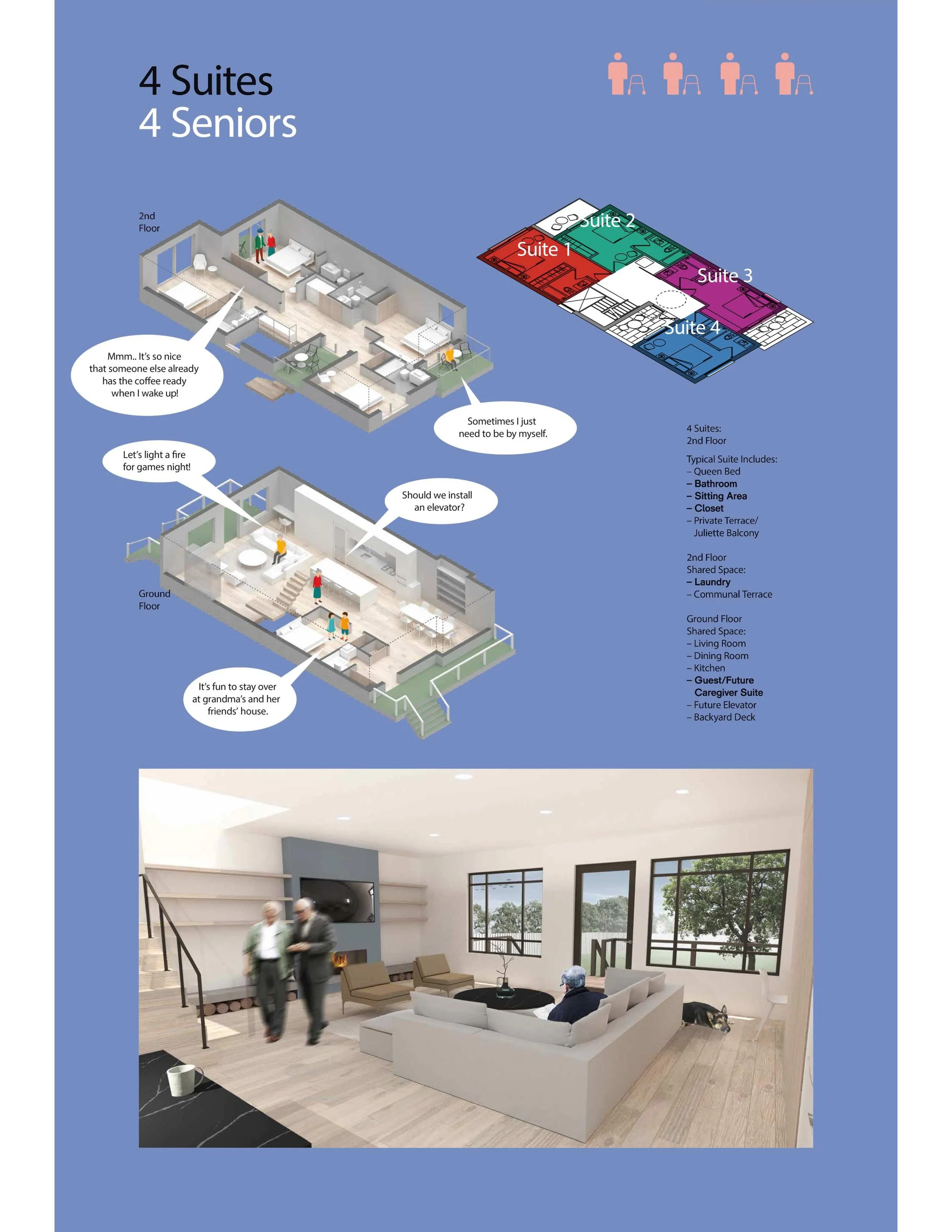
This design reimagines a wider Toronto lot for four seniors to age in place. There are obvious advantages to share costs and to have a built in social circle. Each one has their own suite that includes an extra large bedroom with a bathroom. It allows for a sitting area that connects to an exterior space, whether it is a patio or a juliette balcony. On the ground floor, in addition to the living, dining and kitchen areas, there is another bedroom with a bathroom. It functions as a guest bedroom and can be used as a caregiver suite as the need arises. Additionally, a closet is also strategically placed as a holding space for a future elevator. The hallways are extra wide, not only to meet barrier-free requirements, but also to encourage spontaneous conversations.
By thoughtfully designing for the needs of today and tomorrow, the design allows for autonomy and promotes community as the needs of seniors change.
3 Adults + Co-working space
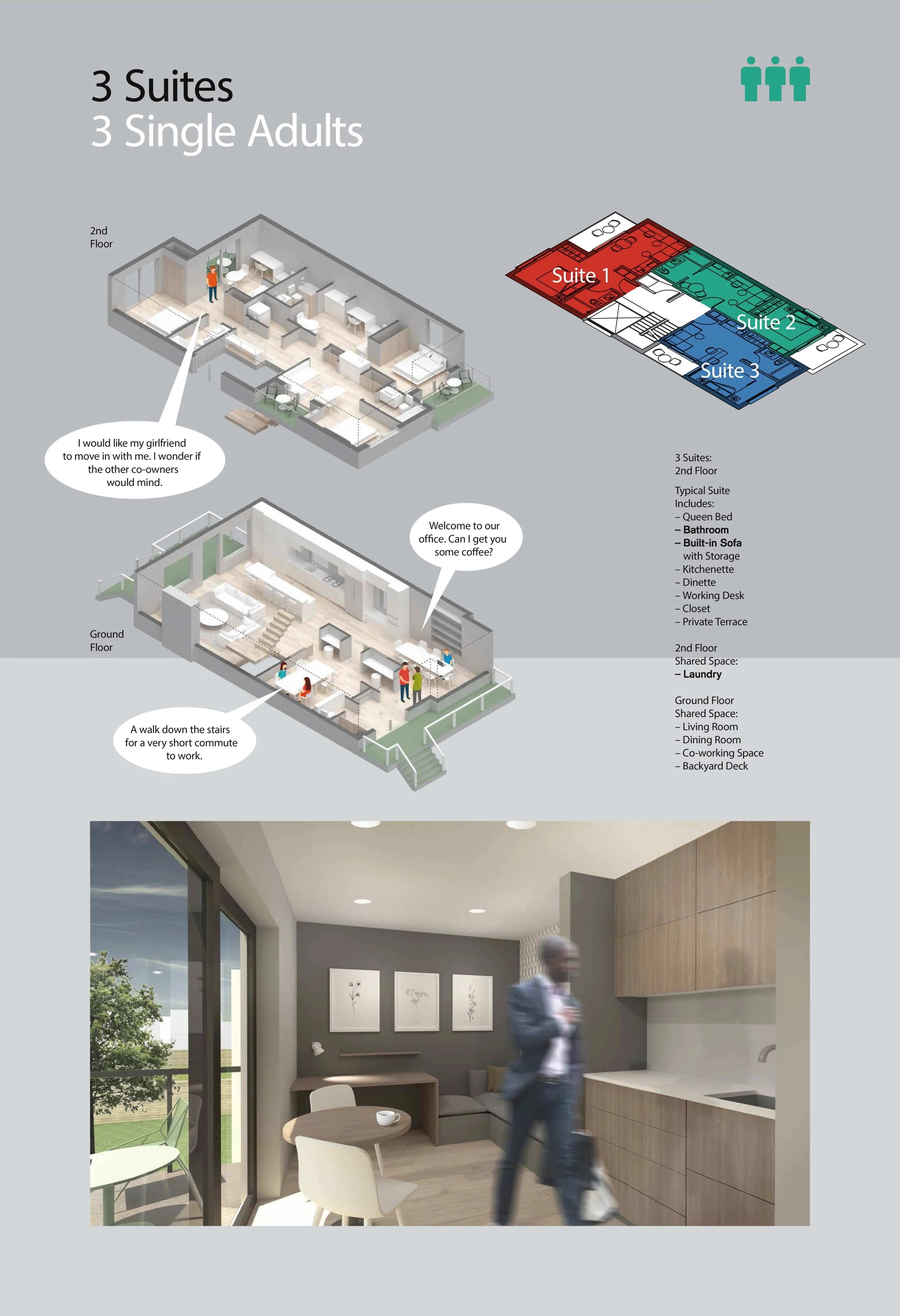
This “3 Units, 3 Adults” design reimagines a wider Toronto lot as a co-living household with tailored work space. This setup allows for three units, each consists of a bedroom, bathroom, kitchenette, living and dining area. Each unit chooses when and how to join in the larger household. The ground floor is split into two halves: front and back. The front is designed as a co-working space, while more relaxed areas are at the back with a direct connection to the backyard. The co-working area is very flexible. It can be an office layout or a working studio, depending on the preferences of the residents. By providing a "shell', the residents can tailor that area to their own trade and change it as needed.
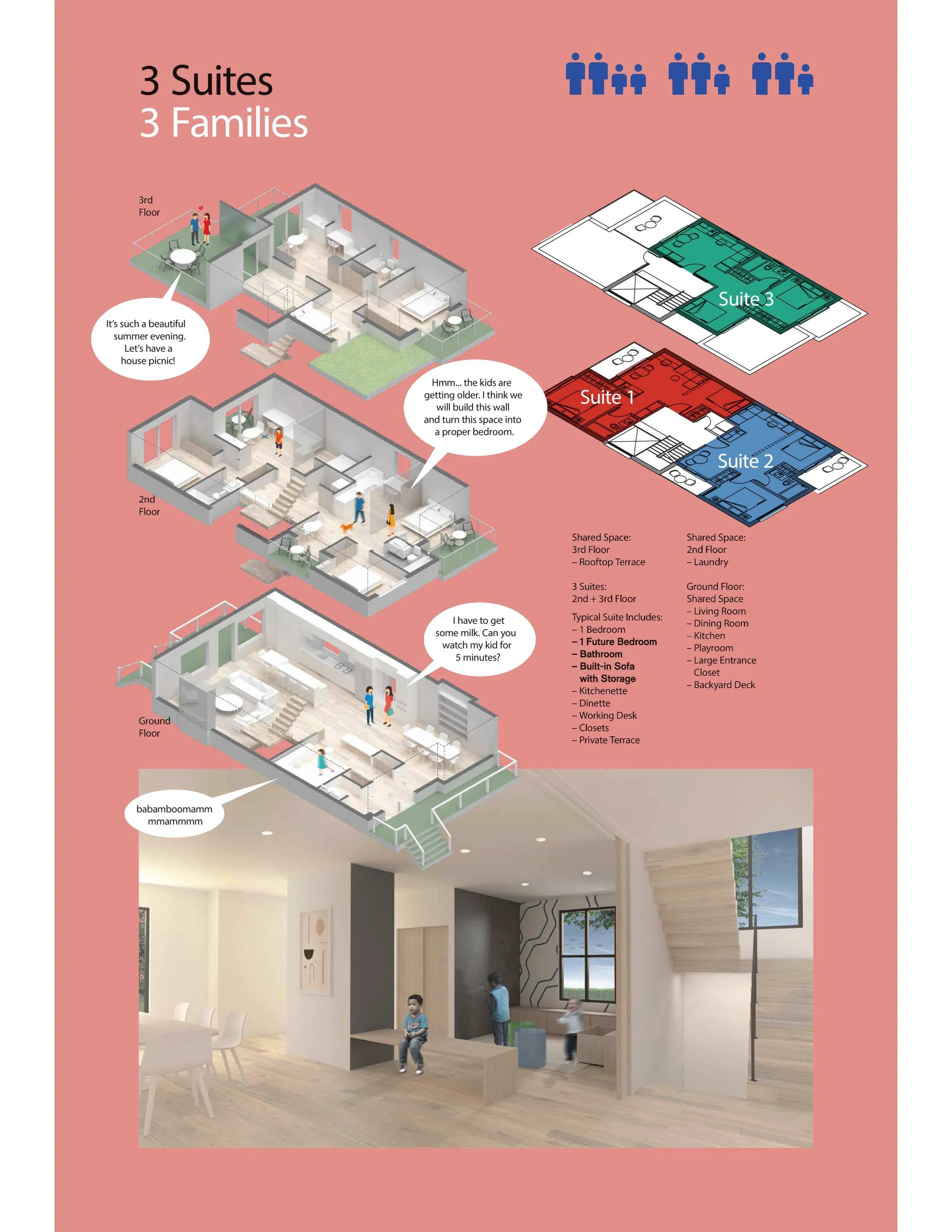
3 Families + Play space
This “3 Units, 3 Families” design reimagines a wider Toronto lot as a co-living village. Each family has its own space complete with kitchenette, dining and living area. It has a bedroom and a den that is ready to be changed to a future bedroom as children grow. On the ground floor, in addition to shared living space and a spacious kitchen, they also share a play space, as well as a generous entrance to accommodate strollers, groceries, etc. A powder room is also strategically located close to the entrance for those emergencies, especially with young children. Each unit has its own private exterior space, but also access to the shared backyard via the ground floor living area.
Life with young children can be very hectic. The village that is automatically inherent in the design provides needed support, much like a built-in network, especially for those without extended families.